I always say that elephants are kind of another species of human beings, living in the wild. In fact, they are even more intelligent than human beings. Julius Shivegha Keeper, Nairobi Nursery
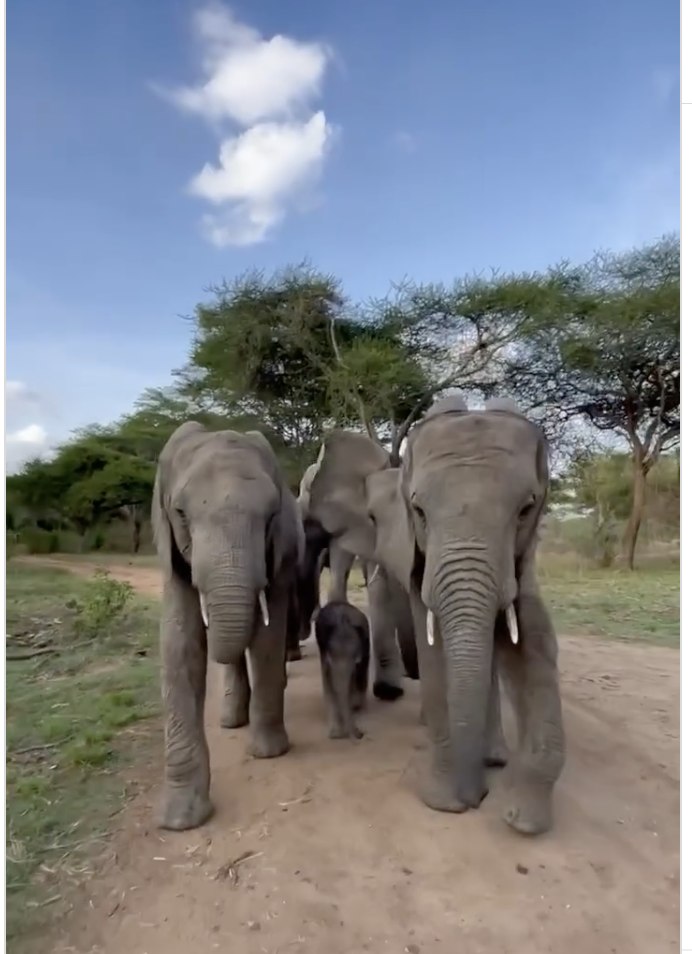
Newborn Mwezi out for a walk surrounded by her protective nannies Photo Credit DSWT
Last week’s story about the birth of Mwezi to ex orphan Murera prompted a question in the comments. Are elephants artificially inseminated? The short answer is no. However, perhaps readers are wondering how Murera, who lives at the Sheldrick Wildlife Trust Umani Springs Reintegration unit in Tsavo East National Park, got pregnant since there are no resident bulls of mating age in the unit. It is a miraculous story, but it is not a story of an immaculate conception. Cue a blog on elephant sex!
Sex on the savanna is a fascinating subject. Mature bull elephants enter a phase called musth for 2-3 months every year. During this time their testosterone levels increase tenfold. The quiet gentle giants have a personality change and can become quite aggressive. Bulls in musth have one thing on their mind; find a female elephant cow in estrus.
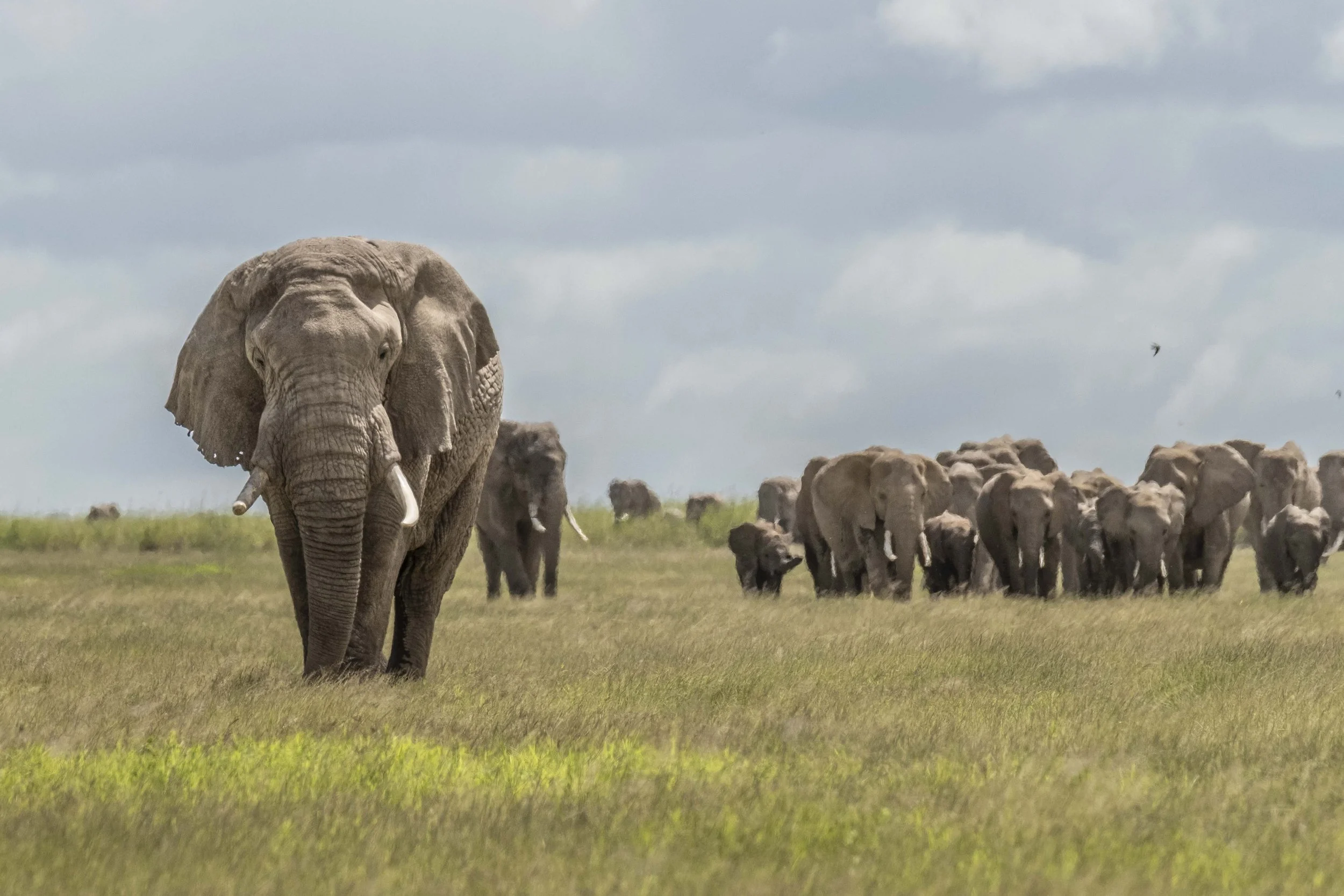
Mature elephant bulls are the mate of choice for cows. Amboseli, Kenya ©kathykarn
Love is in the air when elephants are ready to mate. A bull elephant in musth is a sight and smell to behold. He swaggers across the savannah head held high, swinging his trunk like a pendulum from side to side while sniffing the ground for females in estrus with each step. During musth bulls constantly dribble strong smelling urine leaving dark, wet patches down their back legs. I could smell the rank aroma of this mammoth as he cruised from family to family searching for love on the Amboseli Plain.
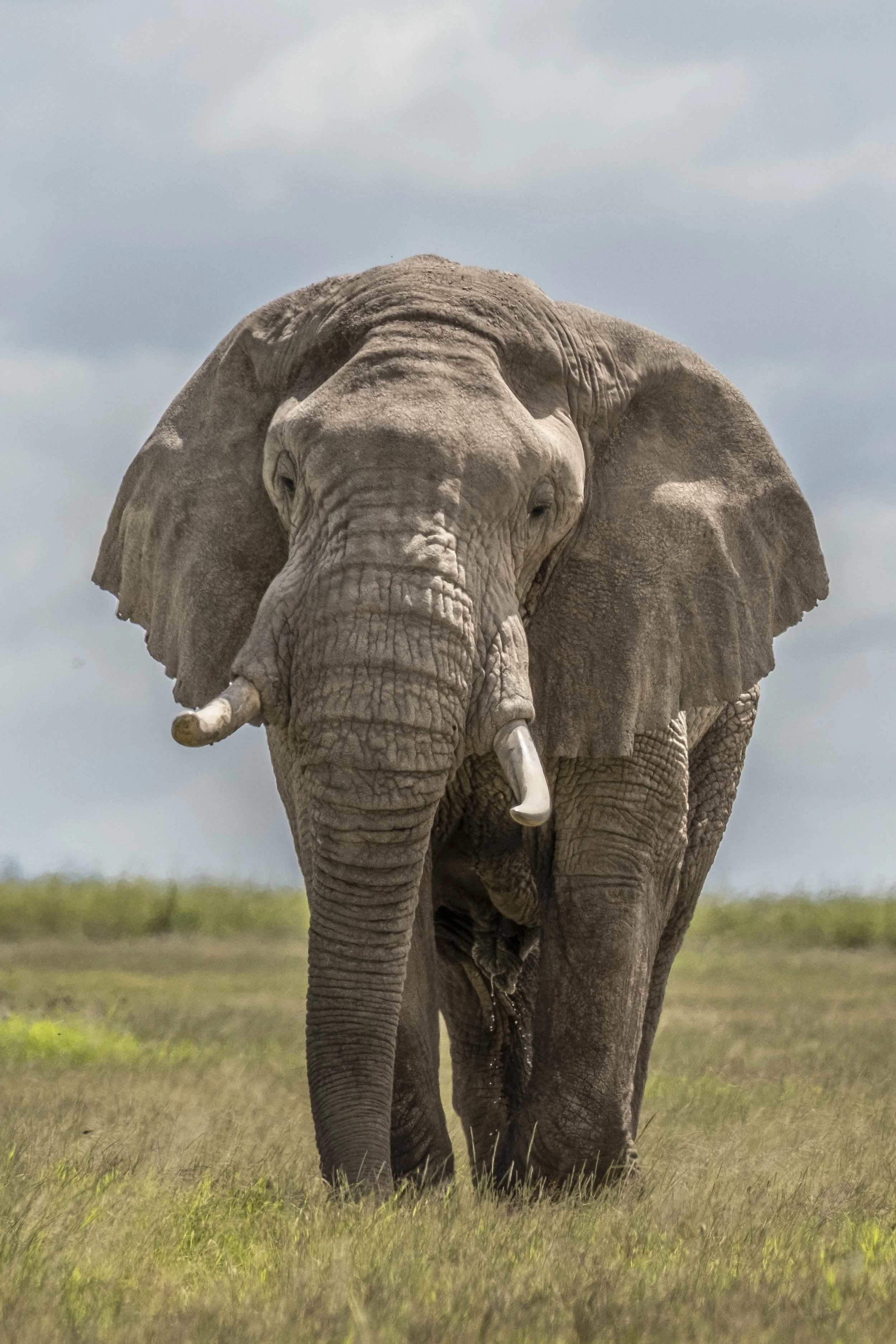
Bull in musth Amboseli, Kenya ©kathykarn
A female elephant comes into estrus three to four times a year when she ovulates and is receptive to mating for about two days. Bulls detect females in estrus through chemical signals (pheromones) in her urine and genital area, using the vomeronasal organ at the roof of the mouth.
Back to Murera’s story. The Umani Springs Reintegration Unit was founded for orphan elephants who have injuries leaving them disabled for life. The region has a constant source of water and vegetation to support the elephants, so they don’t need to travel far to find food. Murera walks with a significant limp due to a dislocated hip resulting from a spiked snare she stepped on as a two-year-old. Because of her disability she would not be able to keep up with a wild herd that migrates long distances for food and water. At Umani the elephants go out into the forest with the keepers daily to browse and return to the stockades for the night. Murera has taken on the role of matriarch of the group. She follows the group home every night at the end of the line due to her slow pace. Well, this was her pattern until one night in 2021 when she didn’t come home. 🙁
In 2021 after the death of Luggart, one of her beloved companions, Murera disappeared for 4 nights. The Keepers thought perhaps she had retreated into the forest to grieve her loss. They were relieved when she returned after a few days. Little did they know what she’d been up to. After a few months they realized Murera was pregnant! She had been in estrus while out on her own and found a male suitor in musth or he found her, who knows.
Murera pregnant with Mwana Photo Credit DSWT
Elephants have the longest gestation of any mammal. Twenty-two months after her 4-day honeymoon Murera gave birth to Mwana. Two years ago, the keepers were wiser and less concerned when she left the unit a second time for a few days. Mwezi is the latest birth resulting from Murera’s brief sojourn away from home. She was born inside the safety of Murera’s stockade with three-year-old Mwana present to greet her little sister.
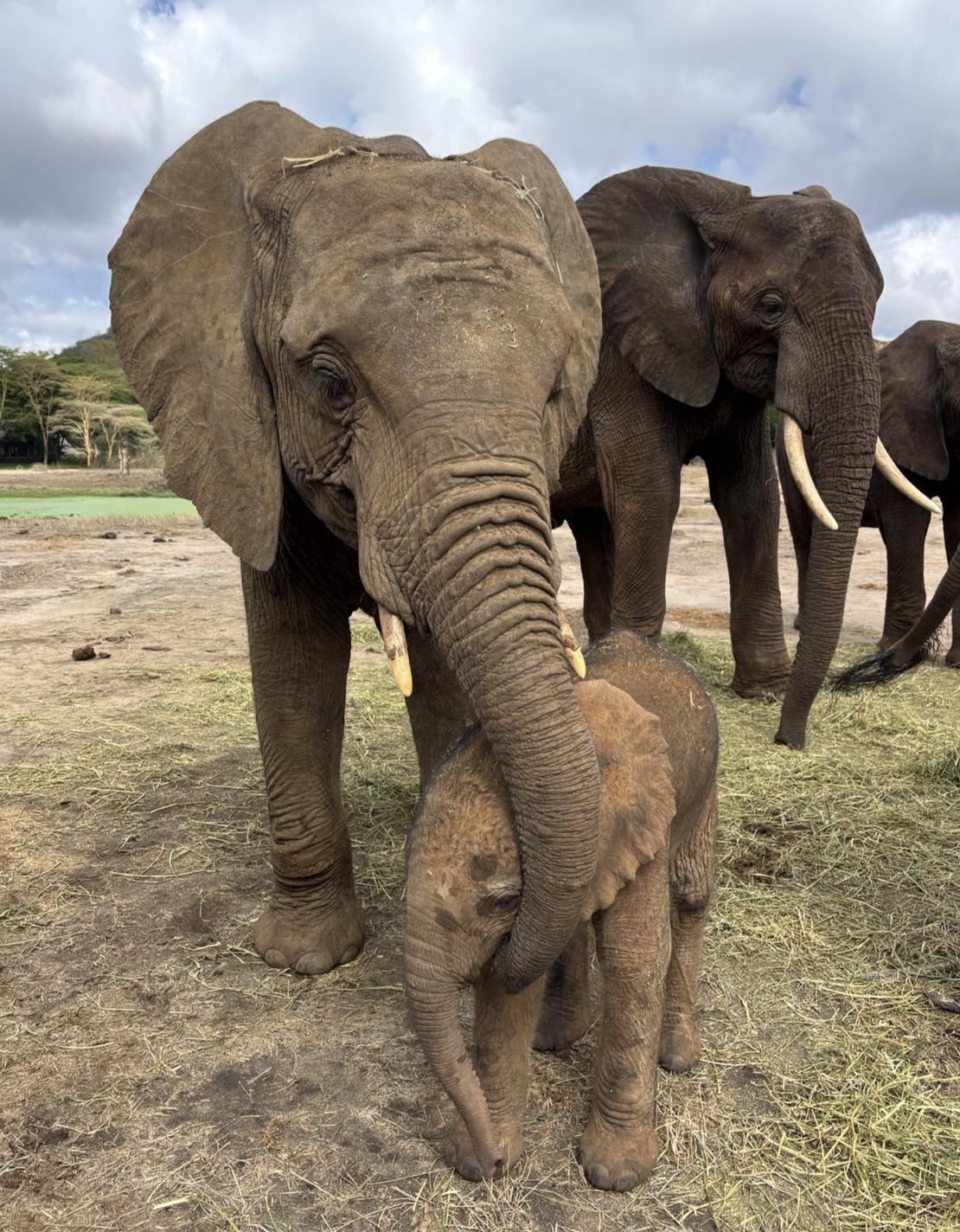
Murera and Mwezi Photo Credit DSWT
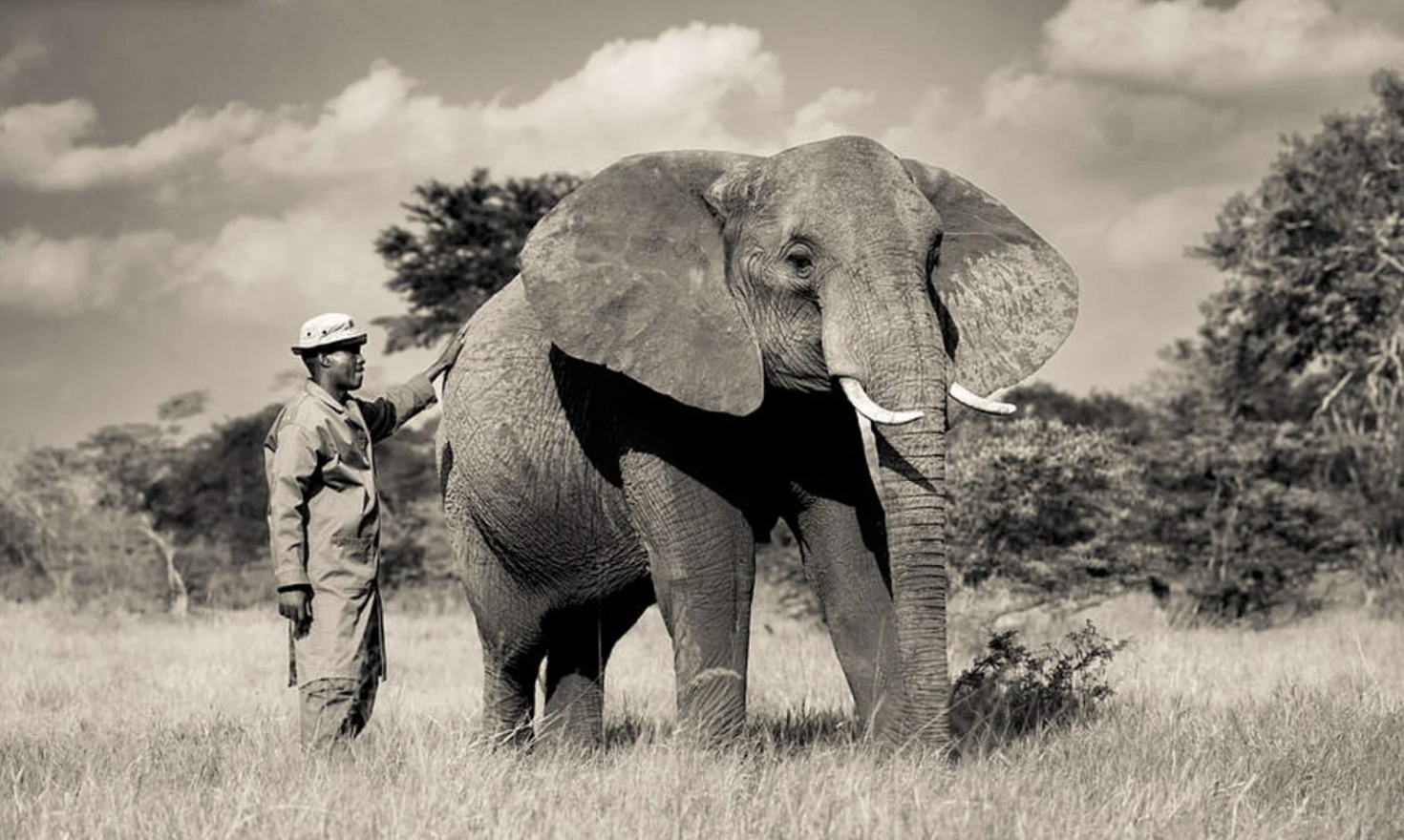
The call of the wild is powerful, however, Murera clearly feels safest at home at Umani. Mwana and Mwezi are growing up in a unique setting interacting with human caregivers and wild elephants. It will be interesting to see what choices they make as they grow up. Female calves typically stay with their mother for life. Males stay with the family until adolescence when they leave the herd and travel on their own sometimes integrating with other wild herds or joining a group of mature bulls to learn the ways of being a bull from their elders.
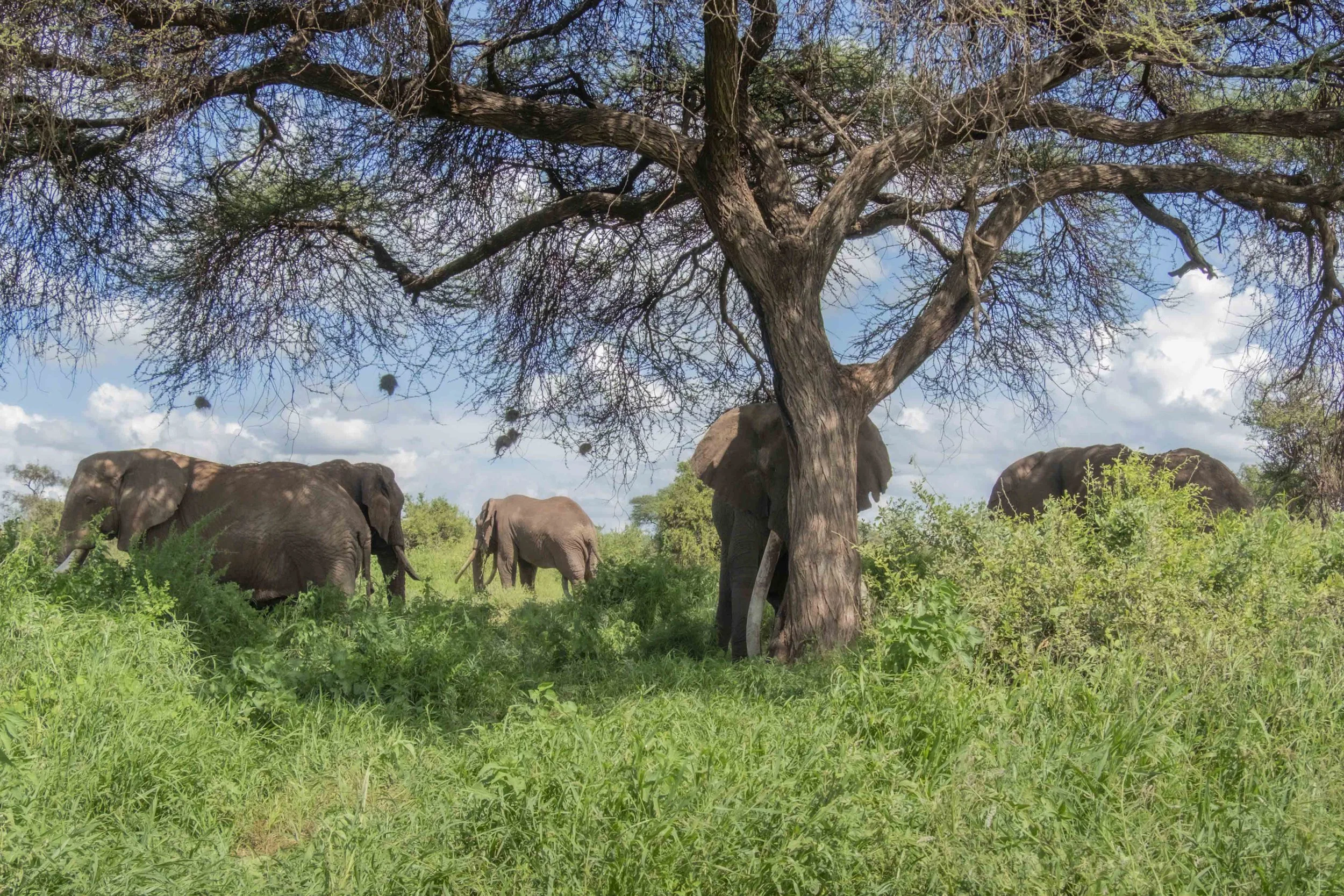
Famous Big Tusker Tim and his male cronies handing out in the shade of an acacia tree ©kathykarn
Who knows what the future will bring for Murera, Mwana and Mwezi. They live in two worlds, secure in the Umani Springs compound at night and free to roam wild during the day. The keepers are clear, whether Murera and Mwana choose to stay, leave, or come and go is their choice. It’s a unique story with many lessons about how caring for wildlife is a two way healing journey.
Follow the Sheldrick Trust on Instagram @sheldricktrust for the latest updates on Mwezi and other Sheldrick orphans.