Elephants constantly remind us that miracles are possible. Many thought she wouldn’t survive, but Murera proved them all wrong. Angela Sheldrick
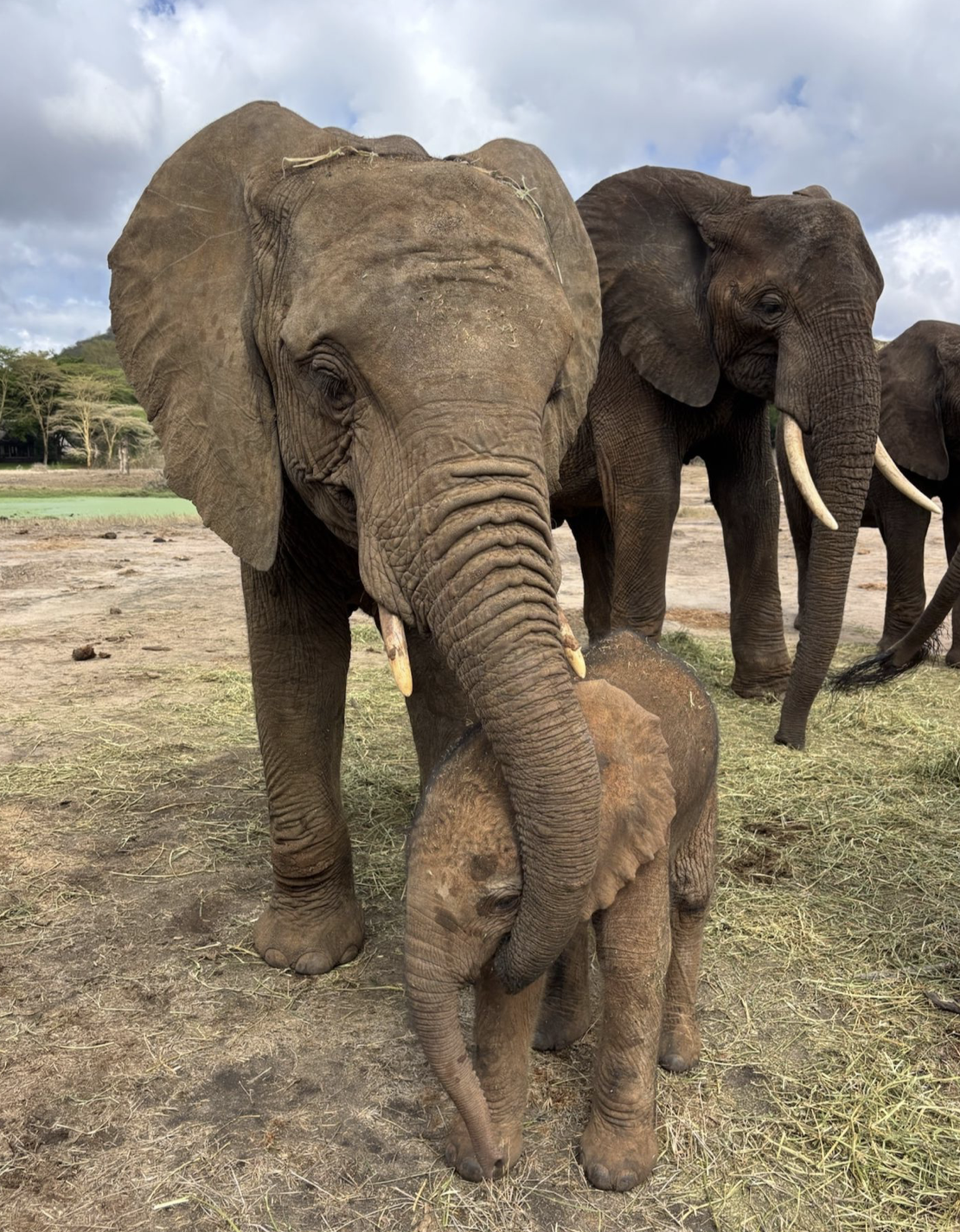
Murera and baby Mwezi Photo Credit DSWT
When an unsuspecting 2-year-old elephant stepped on a poacher’s trap in 2012, spikes dipped in poison were driven deep into her foot, crippling her and releasing poison into her bloodstream for a slow, agonizing death. Fortunately, the calf, named Murera, was rescued by the Sheldrick Wildlife Trust and transported to the elephant orphanage in Nairobi. Orphaned, traumatized by the loss of her family and crippled by the severity of her wounds; a dislocated hip and complex physical injuries, many felt the kindest act would be euthanasia.
But Daphne Sheldrick saw a glimmer of hope in little Murera. “This elephant has a lifespan of upwards of 60 years. Even if healing Murera takes a two-year struggle, it is important we try, as she so wants to live”.
Week by week, year by year, the broken elephant blossomed into a beautiful matriarch. It was for her that we founded our Umani Springs Reintegration Unit, located in a lush, forested environment where disabled elephants could thrive.
This past week The Sheldrick Wildlife Trust shared the exciting news that Murera gave birth to a healthy baby on October 28th at the Umani Springs Reintegration Unit. She delivered her calf inside her secure stockade sanctuary in the middle of the night under the light of a near-full moon. The delivery was over by the time the keepers arrived after hearing rumbles at the stockade. They named the calf Mwezi, which means moon in Swahili. Mwezi is the 97th calf born to orphaned elephants rescued, raised, and successfully reintegrated into the wild by the Sheldrick Wildlife Trust.
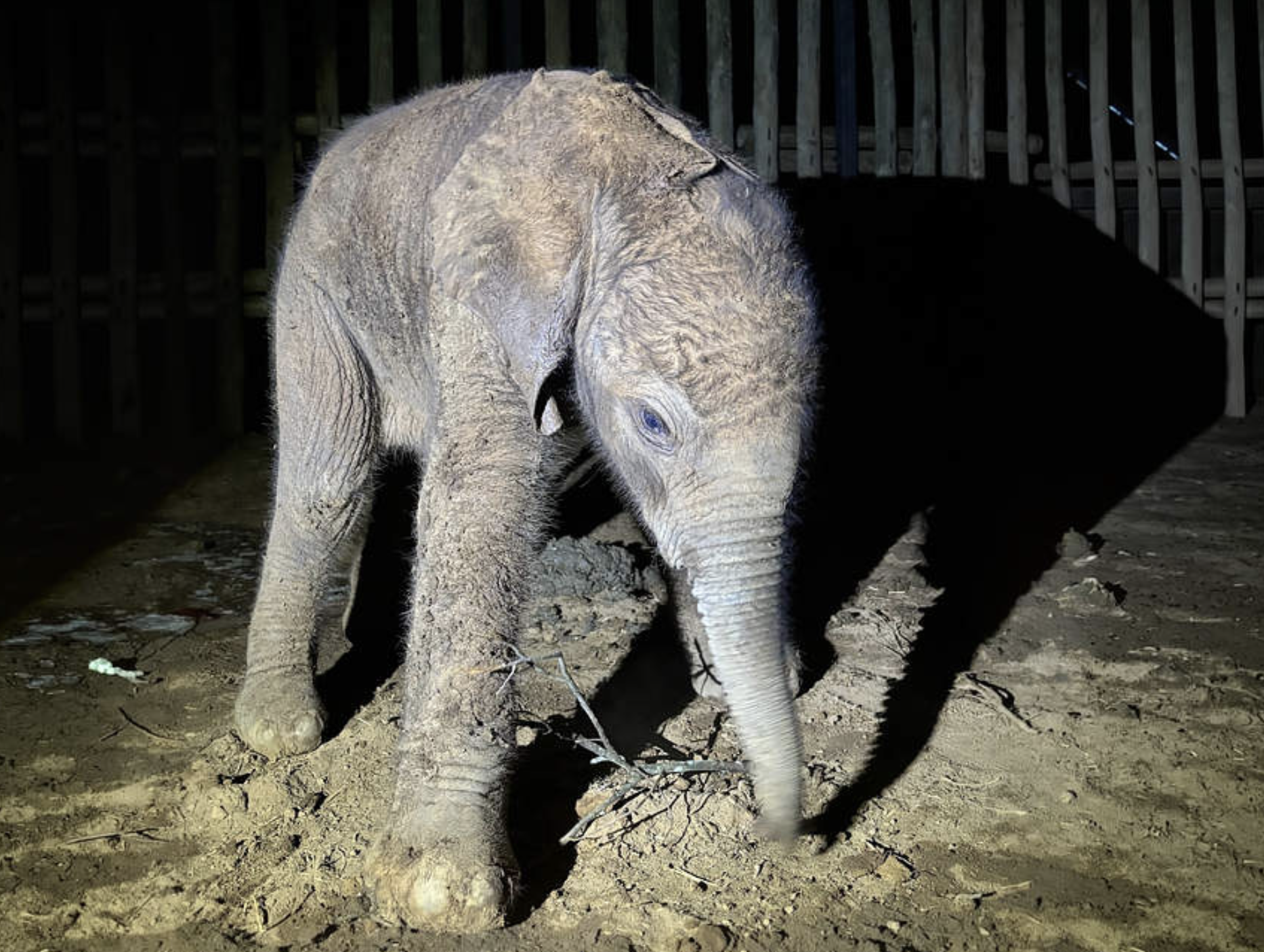
Mwezi’s first steps Photo Credit DSWT
News of the birth traveled instantly over the mysterious elephant communication network. When dawn broke every single wild-living Umani ex-orphan showed up at the stockades to greet little Mwezi.
Mwezi is Murera’s second calf. Mwana, born in 2023, has an extraordinary story too. (Read about her arrival in my 2023 in my blog post Grief and Healing). When Mwana was born Murera was loving and protective, however, she did not seem to know how to nurse her baby. Without milk Mwana would not survive. The fact that Mwana was born in a community where the human keepers were experts in the difficult and demanding task of raising orphaned milk dependent elephants saved her life. The keepers, familiar with raising cattle, milked Murera and bottle fed Mwana for 11 days until Murera finally figured out how to let Mwana nurse on her own. Now an experienced mother, Murera knows exactly what to do this time around. Both mother and calf are doing well.
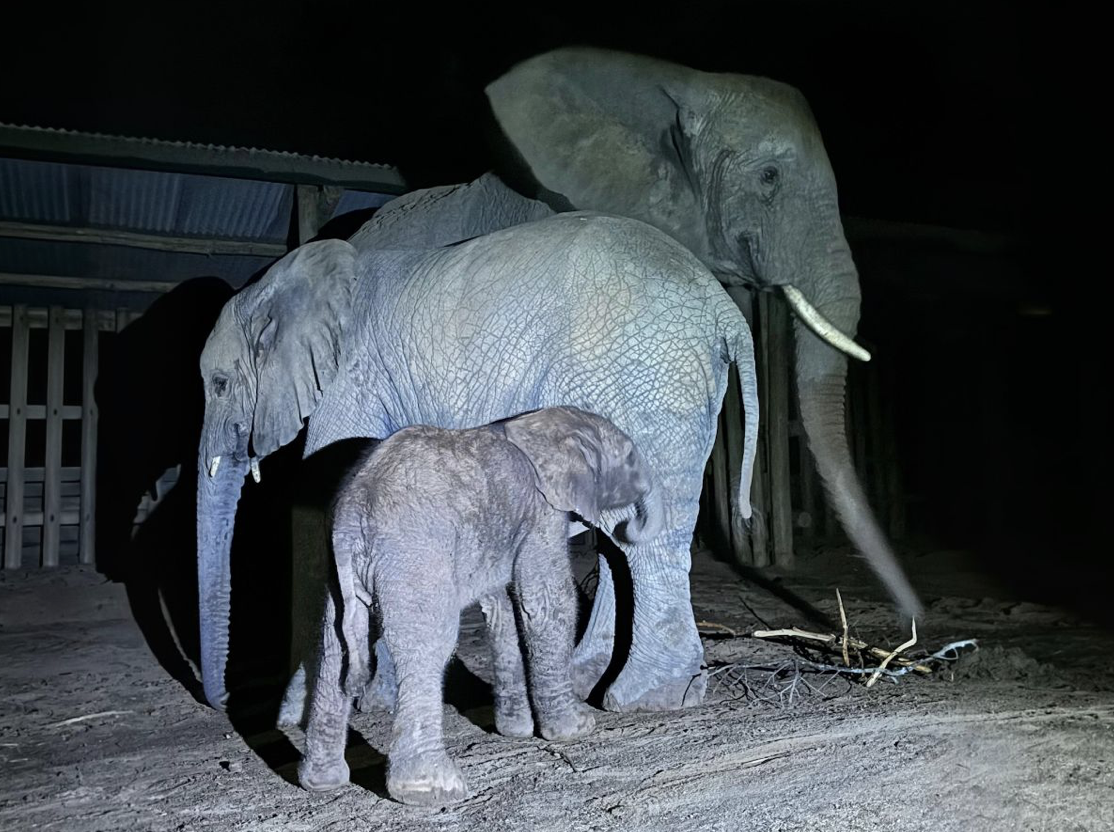
Murera, Mwana and Mwezi Photo Credit DSWT
Apparently Mwana is a very attentive big sister to little Mwezi. Childcare is never an issue in elephant families. Young female elephants are wonderful nannies, eager to step in and babysit newborn calves. Apparently, Amali another female orphan, is also enthusiastically campaigning for the role as Mwezi’s top nanny. You can see her hovering in the background of Murera and Mwezi’s first morning outside.
A commitment to saving one injured elephant has transformed into a family of three. Murera’s family also embraces the Keepers who have been by her side for 14 years and the elephants who respect her, look out for her and adapt their lives to follow her leadership. Murera’s extended family includes a global human community that fostered her and other members in her herd through donations. Murera’s story is a truly healing story worth sharing. We can make a difference, we never know how far the positive ripple effect will travel. When we take care of nature, nature takes care of us.
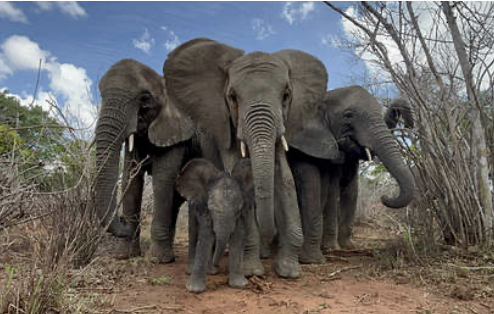
Little Mwezi surrounded by her herd. Photo Credit DSWT.