Elephants Never Forget
The ex-orphans and their babies embrace our presence as if we were any other elephant — a trust that has been passed down through generations and one that does not extend to all humans. Angela Sheldrick
An elephant’s long-term memory is an essential aspect of their survival. Maps in their brains enable them to follow migration routes, find water and food over long periods and long distances. What is equally as remarkable is their ability to recognize and remember individual elephants and humans after years, evens decades of no contact.
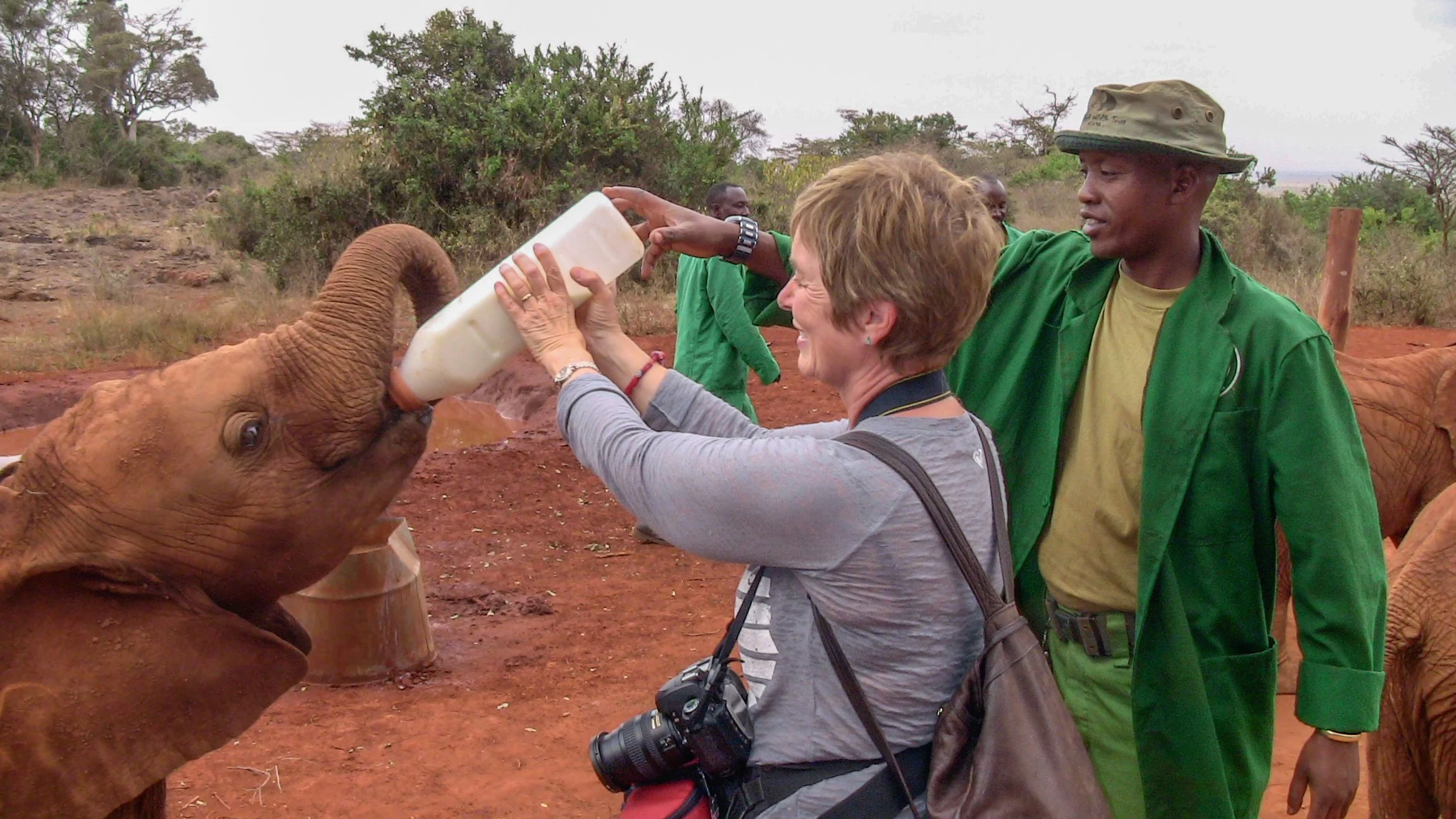
Feeding orphan elephant at the David Sheldrick Nursery in Nairobi 2010
Every baby elephant rescued in Kenya by the David Sheldrick Wildlife Trust arrives with a horrific story. Many are wounded by lions or hyenas and malnourished from lack of food, all are suffering from unimaginable trauma and loss. It takes years of 24/7 care and attention to heal from their emotional and physical wounds before they are old enough to survive on their own and return to the wild.
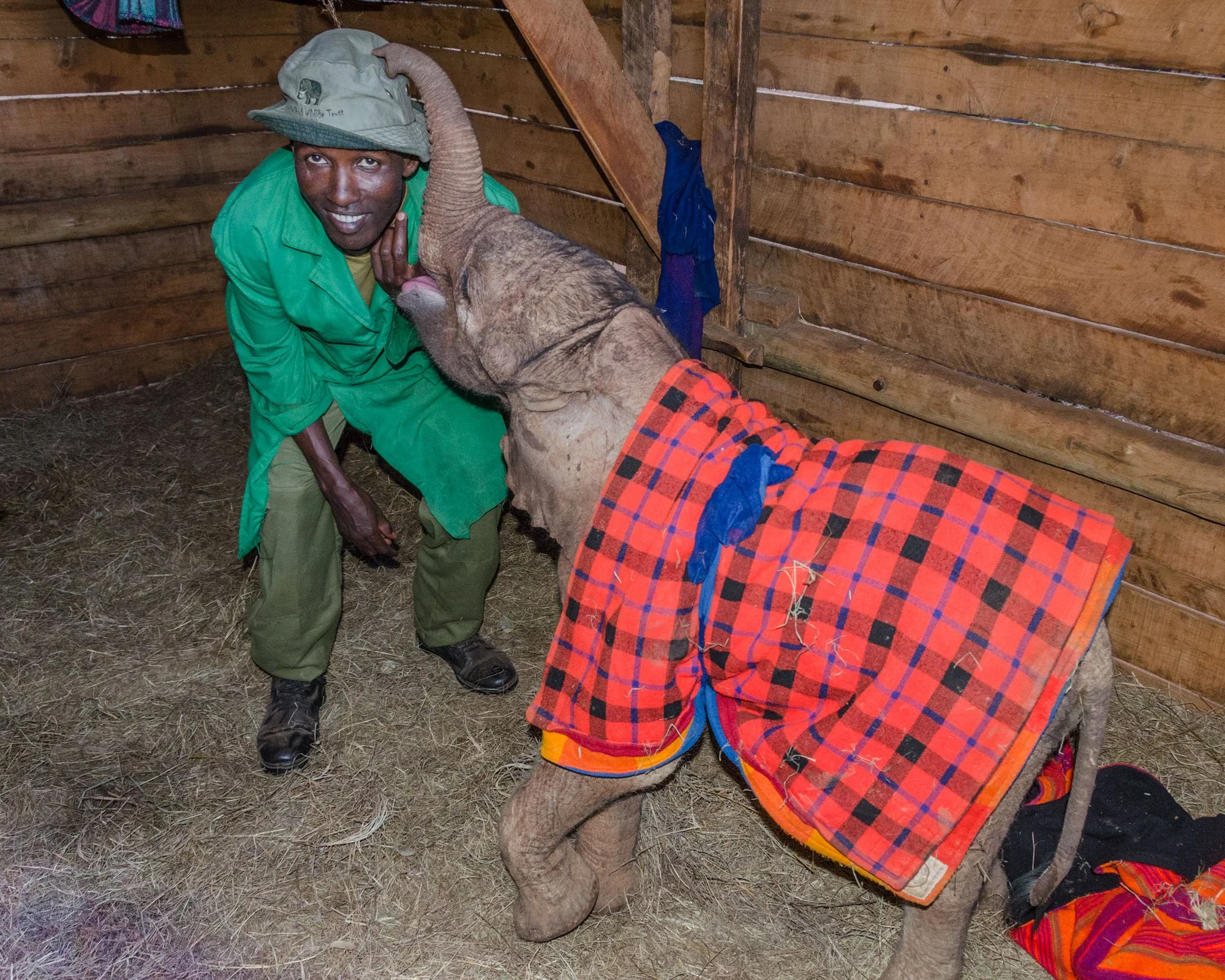
DSWT keepers spend 24/7 with the orphan elephants in the Nairobi nursery ©kathykarn
Around age 3-4 years old the young orphans are translocated from the Nairobi nursery to three separate locations in Tsavo East National Park. Here they begin the long journey of reintegration into the wild. This process can take another 4-5 years as they learn to survive on their own and join other wild elephant families. To date the DSWT has successfully raised 327 orphaned elephants. These rewilded elephants never forget the love and care they received from their human family.
In elephant society the birth of a baby is a time of great celebration. The herd gathers around the infant roaring and trumpeting loudly, flapping their ears and jostling each other for a chance to touch and caress the new baby. What is so remarkable is this jubilant event extends to the human family too.
Without fail, nearly every one of them makes the pilgrimage home soon after giving birth to introduce us to their newborn. Bursting with pride and excitement, it’s as if they feel the celebrations wouldn’t be complete without including their human family in the moment. Angela Sheldrick
In October 2023 I was thrilled to learn that Tumaren, an orphan I fostered in 2010, and rewilded in 2015, returned to the Ithumba unit to introduce her first baby to her human family.
It was after the ‘evening rush’ at the stockades, and most of the visiting ex-orphans and wild elephants had dissipated into the wilderness. Thus, Ithumba Head Keeper Benjamin was surprised to see a mum and newborn calf emerge from the dust and beeline for the stockades. He was even more surprised when he realised it was Tumaren, making the time-honoured pilgrimage ‘home’ to introduce her baby boy to the people who raised her!
My baby had a baby! They named Tumaren’s calf Tembo, which means ‘elephant’ in Swahili.
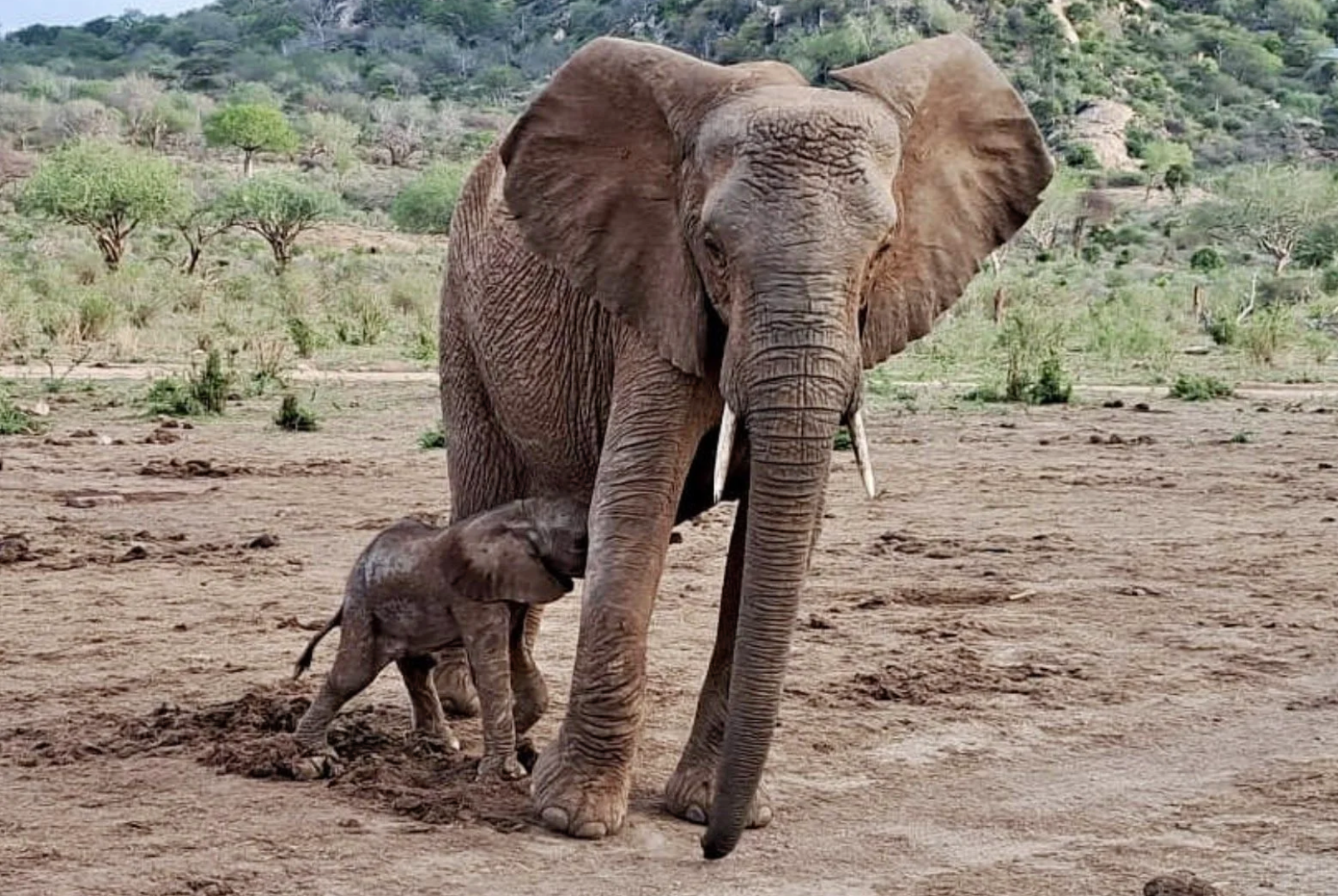
Tumaren and baby Tembo 2023 Photo credit DSWT
Nowhere is the power of love and the enduring bonds of family more evident than this unique tradition between orphaned elephants and the people who saved their lives.
The birth of a new calf is the greatest milestone in a female elephant’s life. When a baby finally makes their debut, it is as if the rest of the herd understands the gravity of the situation. They gather round to rhapsodise, embracing the little one and offering their support to the new mum. It is a beautiful reminder that elephants treasure family above all else — and that love begins the moment a new addition enters the world.
These gifts come in the form of tiny miracles — babies born to orphans raised through our Orphans’ Project. We can usually spot a new debut from a mile away: Mum approaches with a sense of purpose, just waiting for us to notice the little one by her side. She brings her calf right into our midst, inviting us to admire the newest addition to our collective family. Some take up residence in the area for several days or weeks, others make only a brief appearance before disappearing from whence they came.
Which makes it all the more incredible when we see an elephant appear on the horizon, a tiny baby by her side. She has made this trip home for the express purpose of celebration, often travelling great distances to be there. Angela Sheldrick
This year Tumaren returned to Ithumba with Tembo and her second calf Tuck. The tradition of including DSWT in the celebration of new life is clearly deeply instilled in the ex-orphans’ memories.
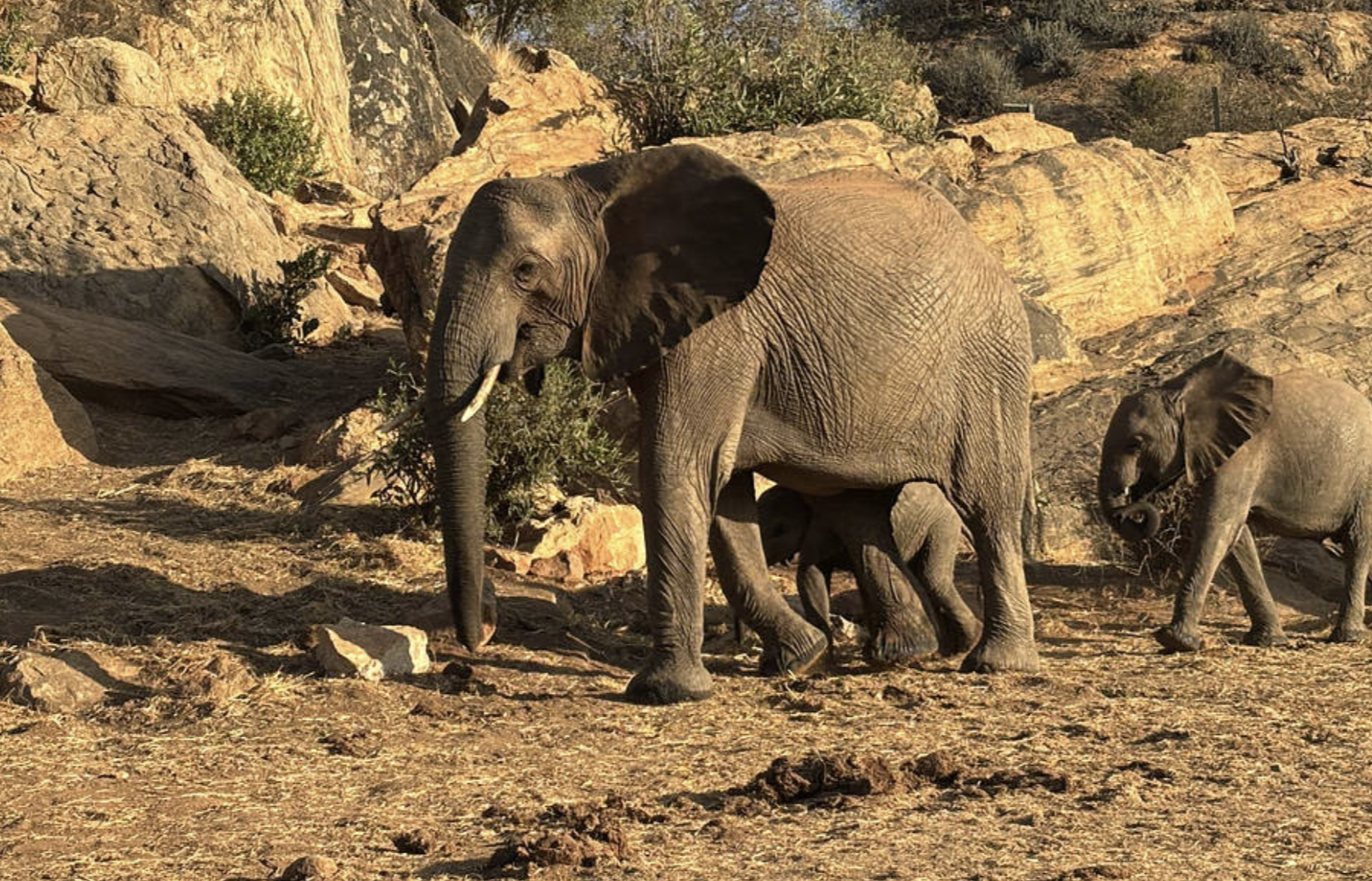
Tumaren, newborn Tuck and young Tembo. Photo credit DSWT
Elephants, like humans, can suffer long term symptoms from PTSD after devastating trauma. Elephants, like humans, can heal from their emotional and psychological wounds with love, care and community. The ex-orphans’ presentation of their babies at the reintegration units is part of their healing journey and compelling evidence that elephants never forget the love and kindness they received from their human family.
As of September 2026, ninety-four elephant calves and grandcalves born to orphans DSWT raised and rewilded have been introduced to the staff at the reintegration units. There are likely even more calves with orphaned parents because those fathered by former male orphans are unrecorded.
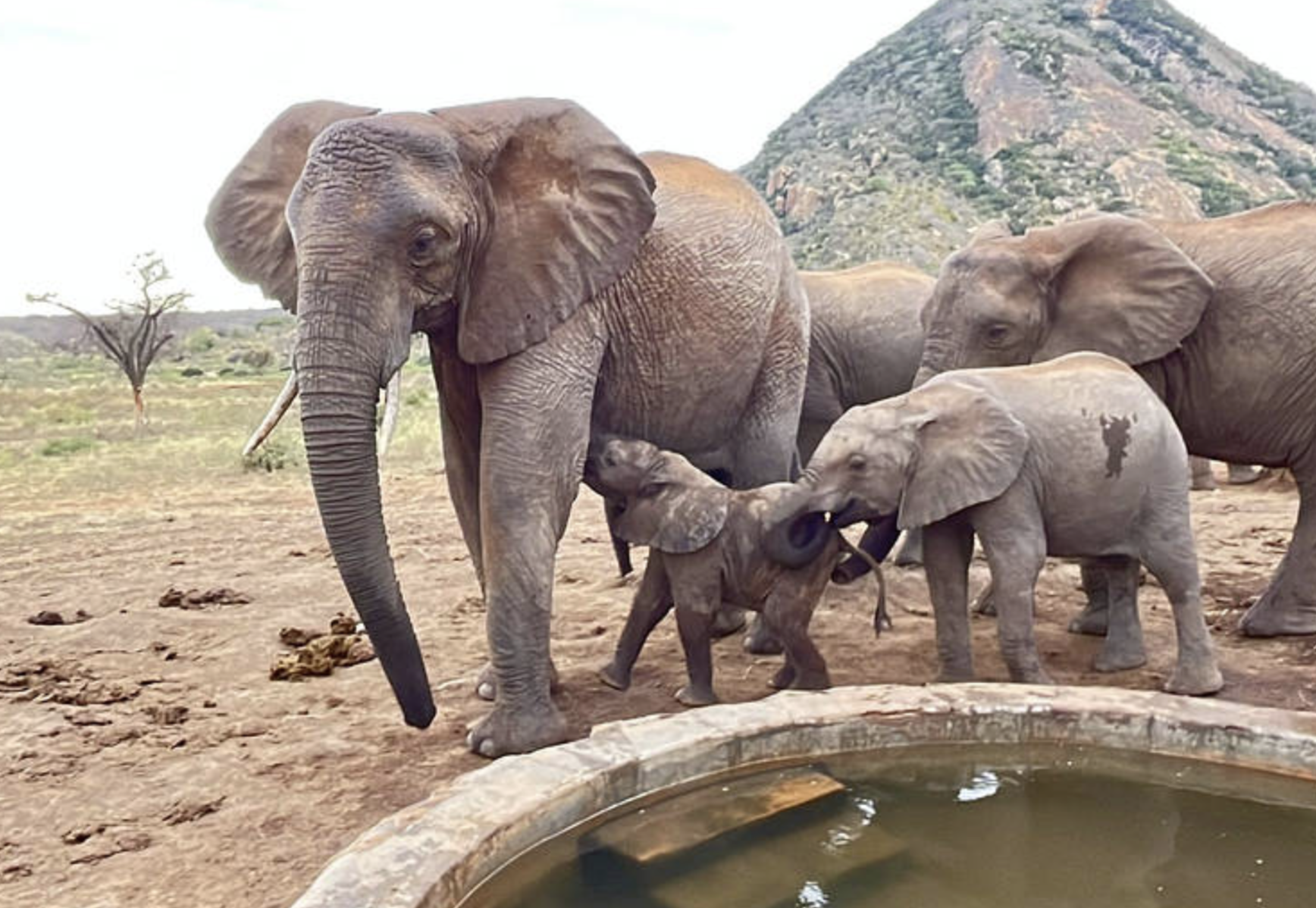
Tumaren, Tuck and Tembo, Ithumba 2026 Photo credit DSWT
Never underestimate the power of love and kindness. Even small acts of caring and compassion can change a life and be remembered for a lifetime.
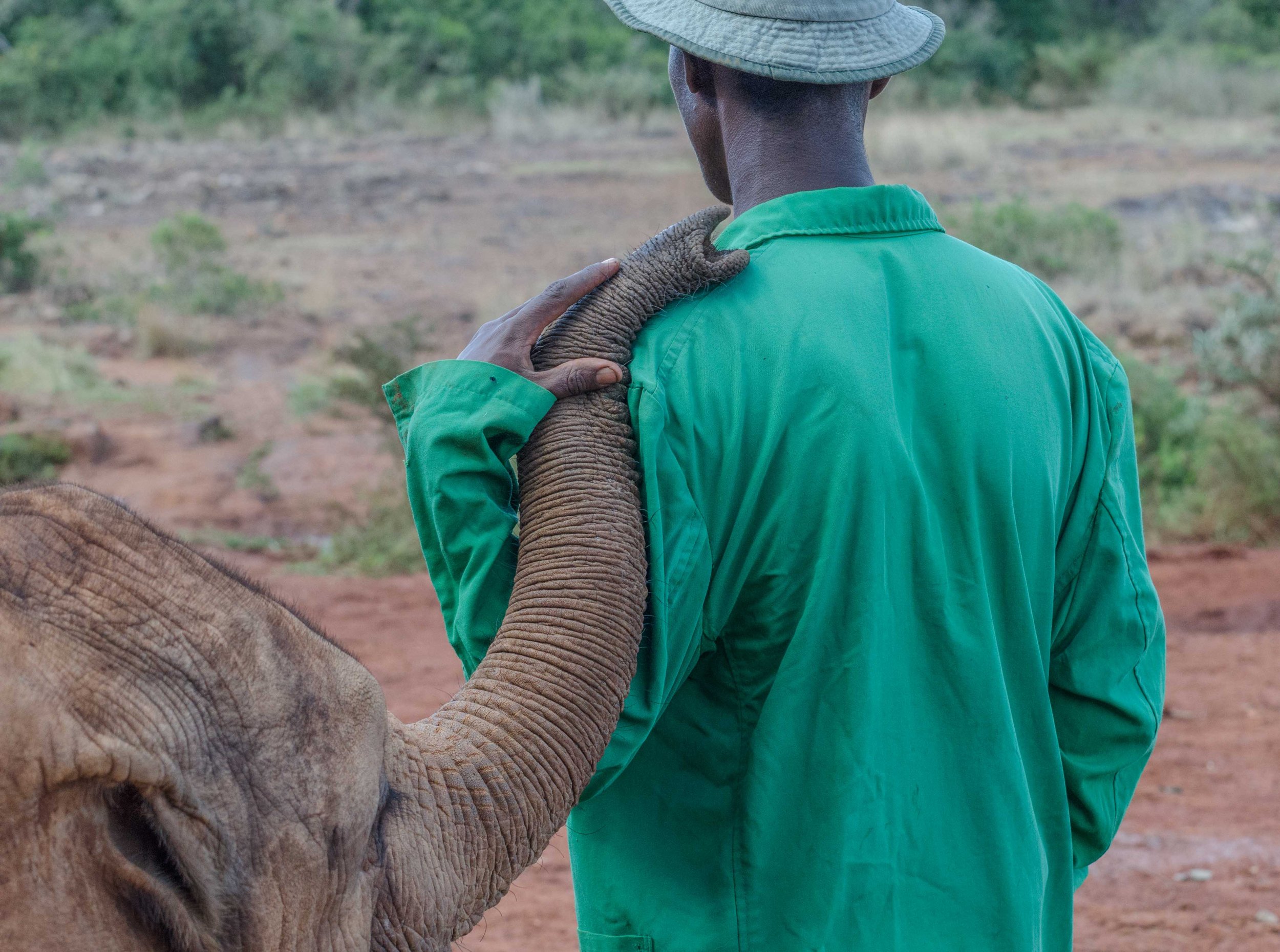
Elephant Love ©kathykarn