Saving Africa’s Dinosaurs
80% of the world's remaining diversity is protected by just 6% of the world's population, all of whom are Indigenous Peoples. - Sarara Foundation

Loijipu was only 2 days old when he was rescued.
In celebration of World Rhino Day on Sept. 22nd here’s a repost from February 2023 with an updated report about orphan rhino Loijipu.
“Come see the baby rhino,” urged my Samburu guide Robert Lemayian. I was glued to the scene before me on the other side of the compound; a group of elephant orphans who had just come in to the sanctuary for their late morning bottle feed.
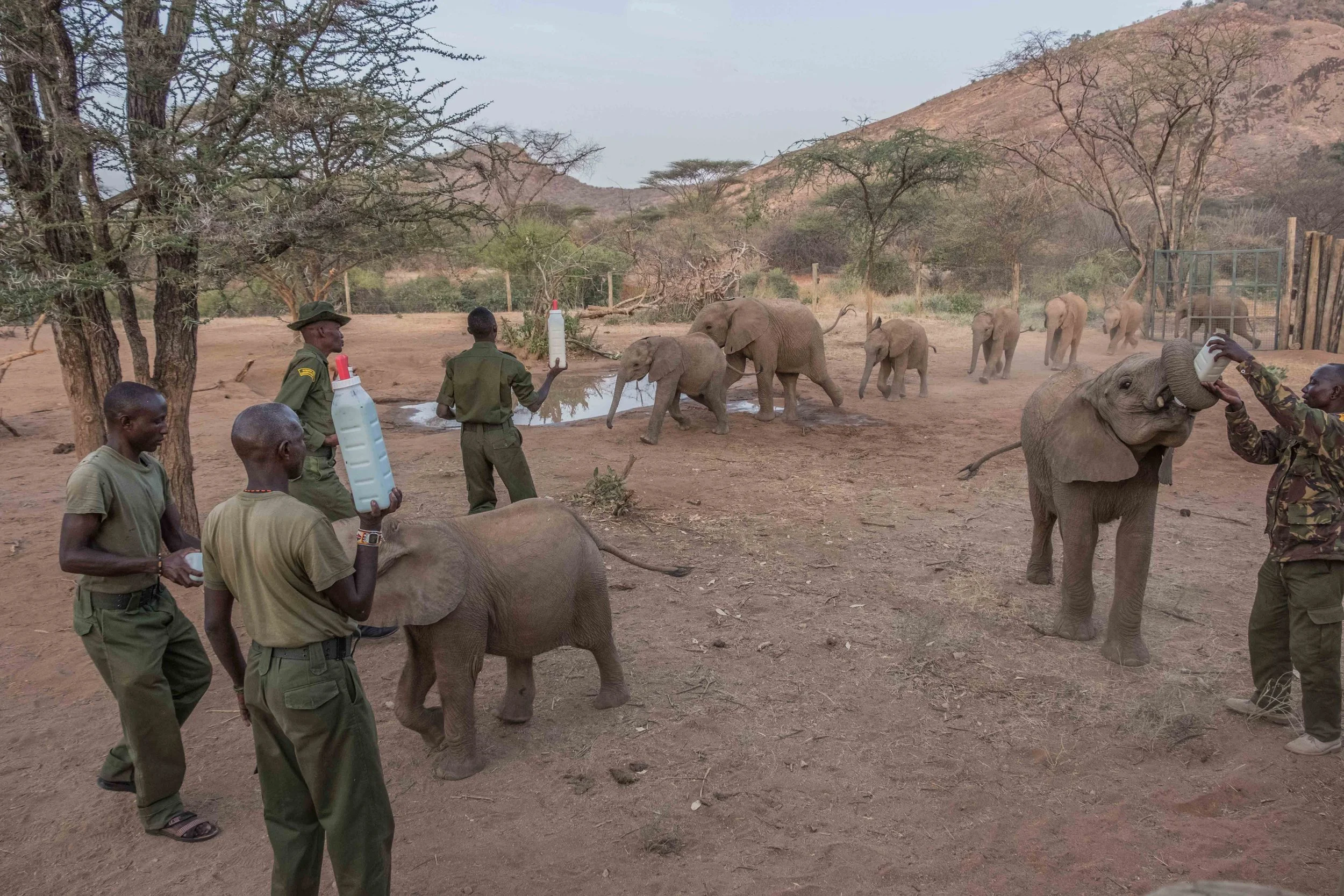
The orphan elephants race in for their mid morning feeding at Reteti Elephant Sanctuary.
It was hard to tear myself away from the happy party of young elephants guzzling their milk and mobbing their keepers with trunk hugging affection.
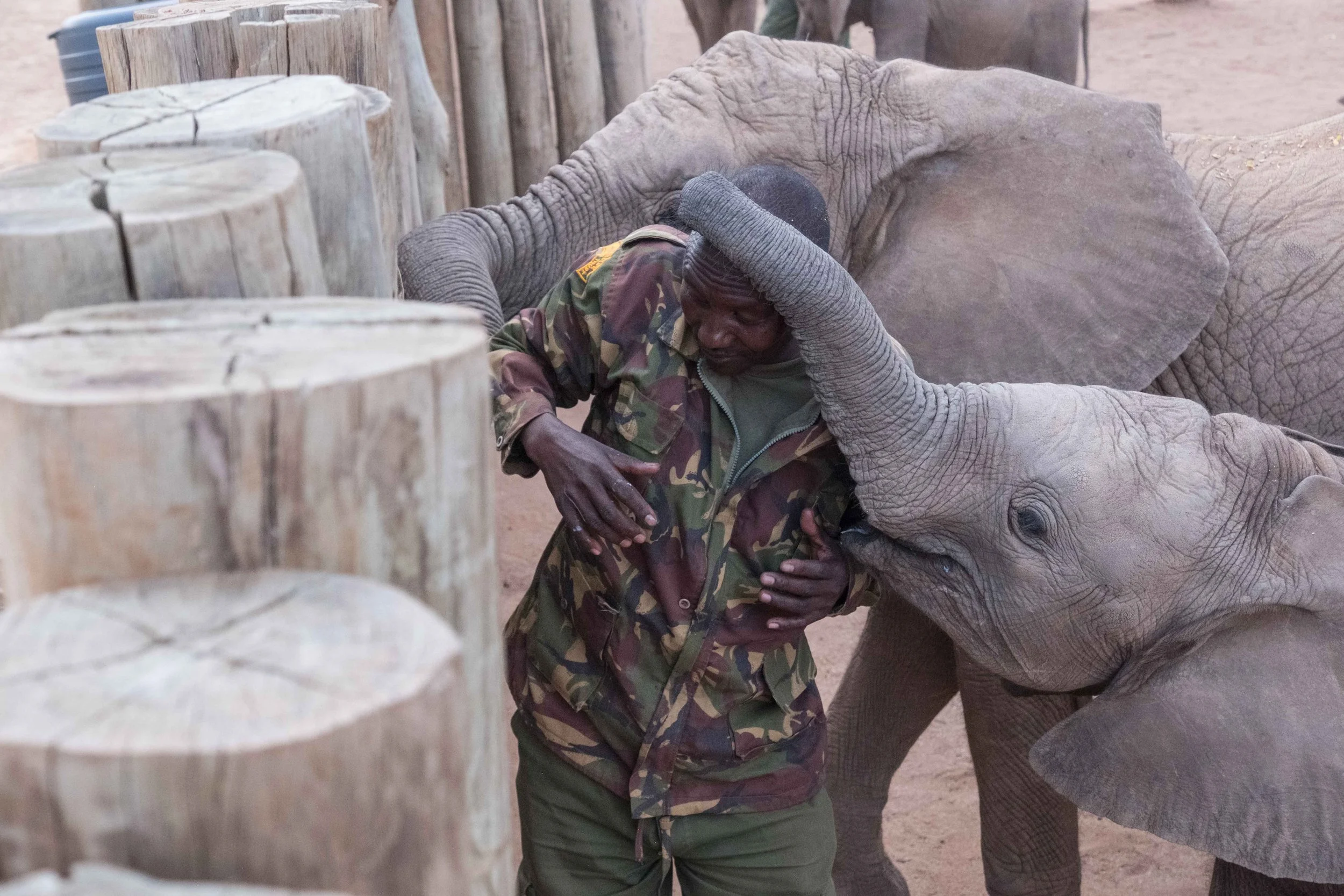
Elephant love!
“Kathy, come and see!” insisted Robert. He was excited to show me Loijipu a black rhino orphan who came to Reteti when he was only 2 days old. Approximately 4,000 black rhino and 15,000 elephants once roamed this area of Northern Kenya. The surge in demand for rhino horn and ivory and a ban on hunting in 1977 created a perfect storm for poachers and the black-market trade in ivory and rhino horn.
With no protection, by the early 1990’s rhinos were completely eradicated from the region and only 400 elephants remained. Browsing rhinos and elephants play an important role in an ecosystem keeping grasslands open. Without these keystone animals the area shifted from grasslands to a woodland cycle leaving the area devoid of wildlife due to lack of grass and increased instances of drought. The degraded landscape became less and less productive for the local Samburu and their livestock.

Robert and Loijipu
Robert’s generation grew up never seeing rhinos in the wild. Loijipu was the first black rhino to be born in a community conservancy in Kenya. No wonder Robert was excited to show him off. Unfortunately this little calf was abandoned by his mother, who had gone to browse and left him behind in February 2017. While she was gone, some curious researchers got too close to the newborn. When his mother returned, she could smell the humans on him and rejected him. When Loijipu was found he was so tiny the Reteti staff could carry him in their arms. He thrived at Reteti under the care of his dedicated keepers, especially Mary, one of the first female keepers at Reteti.

Taking care of an orphan rhino is a 24/7 commitment
How do you pat a rhino? Loijupu poked his little horn through the gaps in the fence squealing excitedly and begging for attention.

Black rhino adults are aggressive but little Loijipu only wanted love.
Loijupu was smoothly translocated to the Sera Conservancy in May 2018 where he was warmly welcomed by Sera Community members. Mary stayed with him for two months as he became accustomed to his new surroundings. Today he is doing well and has successfully been “rewilded”within a protected area monitored by the rangers at Sera rhino sanctuary.
Reteti represents a growing grass roots movement of community focused conservation that is gaining momentum in Northern Kenya. Once heavily poached and severely degraded by instability, the northern rangeland is restoring itself through transparent, self-governed community conservancies that promote the preservation of natural resources in order to create stability, employment and revenue. Now visitors come from around the world to see their wildlife and learn about traditional Samburu culture.
Restoring and preserving the environment has a positive impact on the people, the wildlife and the land. Learn more about the Sarara Foundatin that is investing in Indigenous people, protecting biodiversity and fighting climate change.
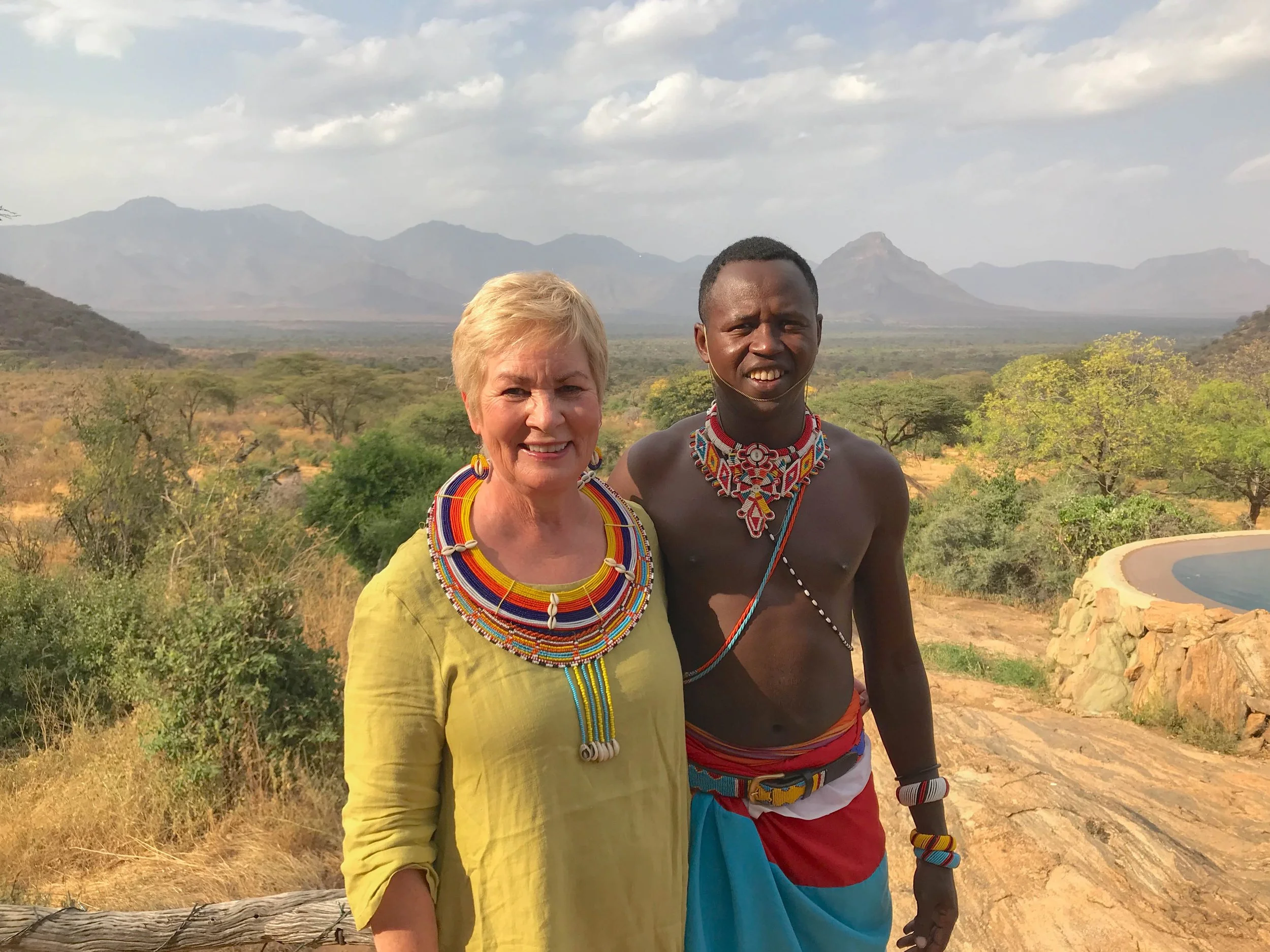
I was honoured to be invited to attend a Samburu wedding as Robert’s guest.
Today progress in restoring rhinos to the African landscape is happening in other areas of the continent too. Three years ago African Parks took responsibility for approximately 2,000 southern white rhino and began an ambitious ten-year effort to rewild them into secure, well-managed protected areas across Africa.
Since then, over 700 rhino have been moved, new populations established, existing ones strengthened and important lessons learned along the way.
Follow the extraordinary journey of 32 southern white rhino from Munywana Conservancy in South Africa to Entebbe, Uganda, before they continue to Garamba National Park in the Democratic Republic of the Congo and Ziwa Rhino Sanctuary in Uganda. The film reveals the planning, veterinary expertise and collaboration behind one of Rhino Rewild’s most ambitious translocations.
https://www.africanparks.org/what-does-it-take-move-32-rhino-across-africa
For more on Rhino Rewild, go to www.rhinorewild.org.