Zazu - Mr. Banana Beak
“Good morning, mon ami! It's a brand-new day. Chimps are going ape, giraffes remain above it all. Chicks are panicking, rhinos are running wild.” Zazu from The Lion King
Anyone who has seen The Lion King knows Zazu, the anxious, fussy, and loyal red hornbill who serves as the lion Mufasa’s, majordomo and royal advisor.
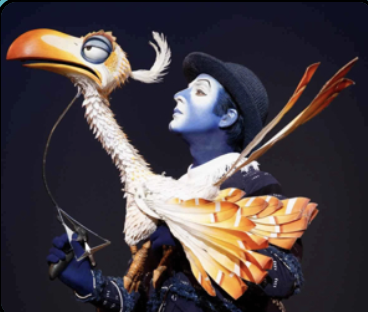
Zazu and his puppeteer in the stage production of The Lion King
Zazu is as irresistible in real life as he is on stage. Hornbills live in the open grassland and Acacia woodland of sub-Saharan Africa. They are often seen hopping on the ground or perching in trees foraging for insects, small reptiles or fruit. Hornbills are known as the "farmers of the forests". These big, iconic birds with huge beaks help control insect populations and disperse seeds, making them important “housekeepers” of the savanna much like Zazu is the “housekeeper” of the royal family in The Lion King.
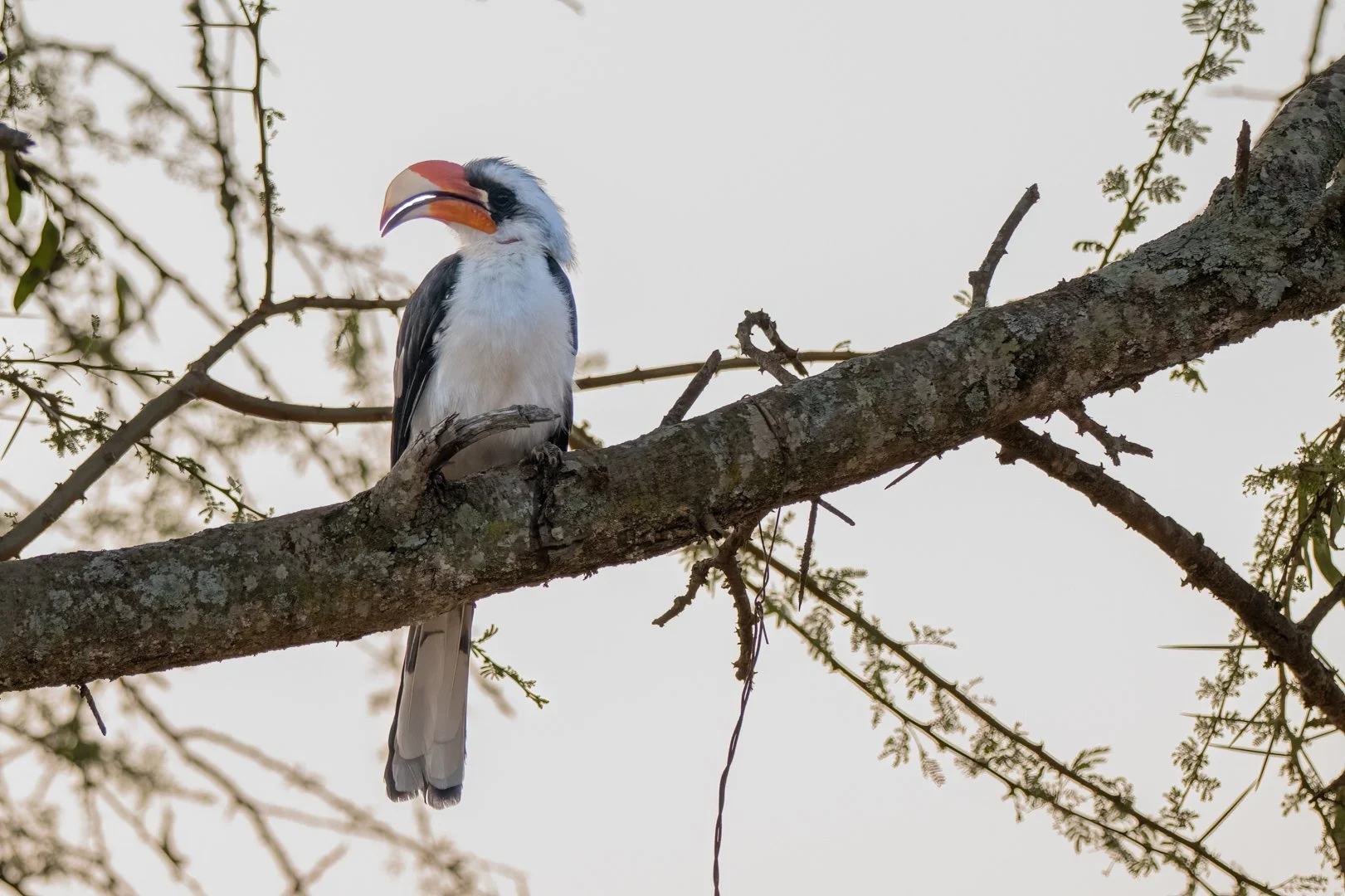
Zazu ©kathykarn
Just like the puppet Zazu, hornbills really do have long, curved red and yellow beaks, white underparts, mottled black-and-white wings, and relatively long tails. And, like crows, they are omnivorous opportunists.
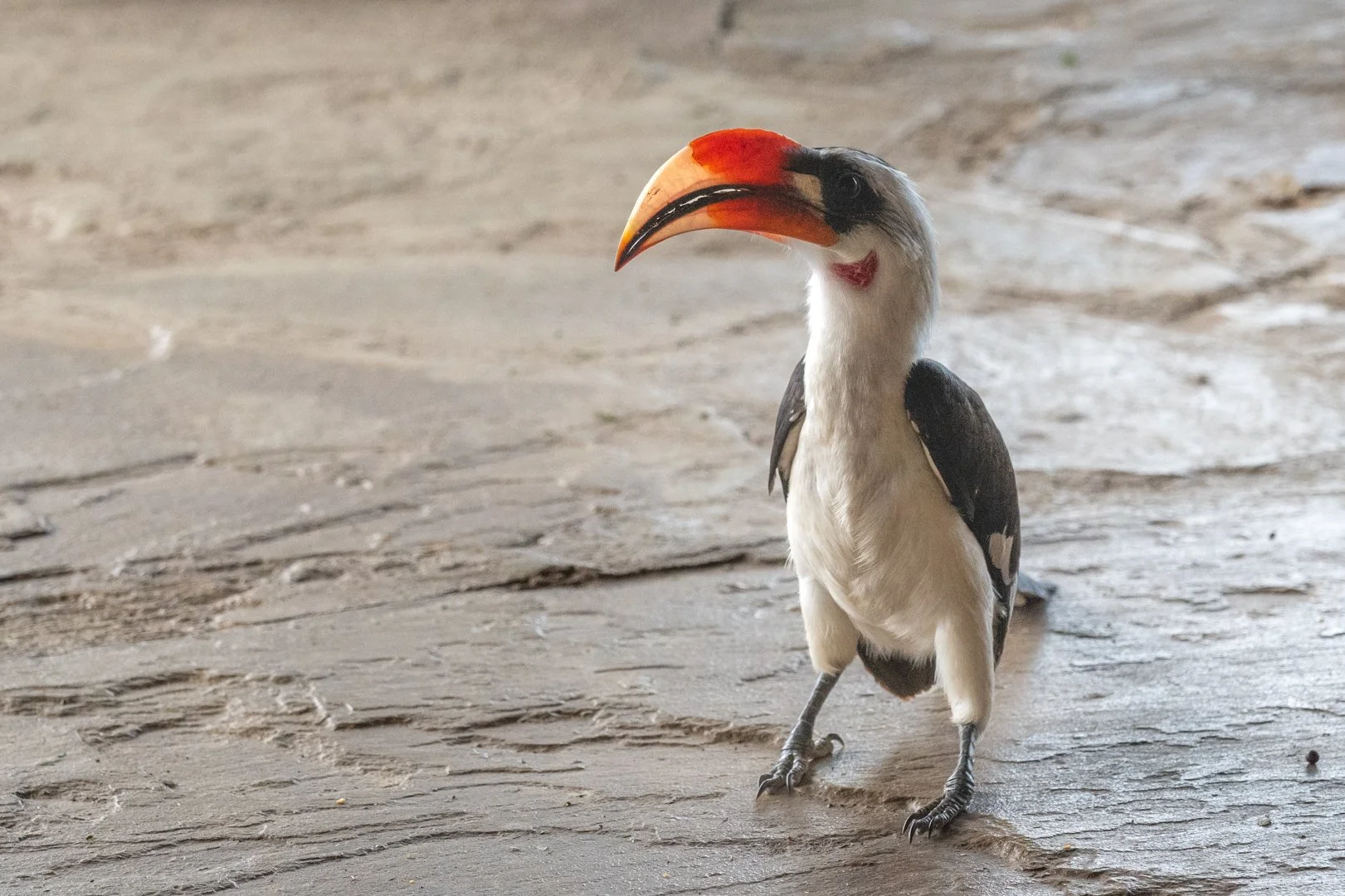
Zazu hoping for a handout ©kathykarn
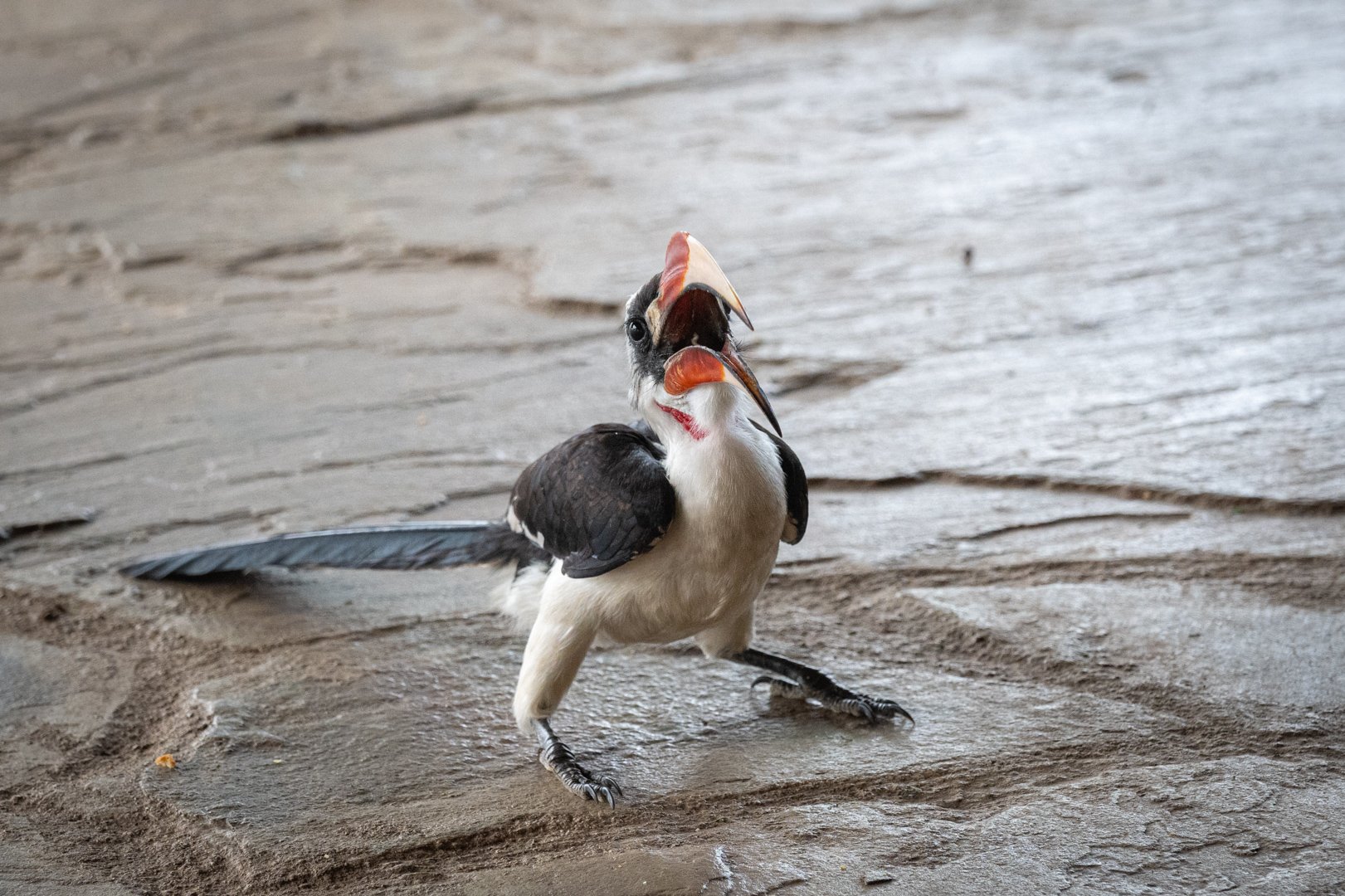
I couldn’t resist this hornbill who hopped up to our table in the dining tent at our camp in Tsavo East begging for a handout last January. I tossed him a piece of dinner roll. In return, he graced me with a front row demonstration of how to gobble down a snack with that huge beak.
Step one: The Pickup.

©kathykarn
Step 2: The Toss
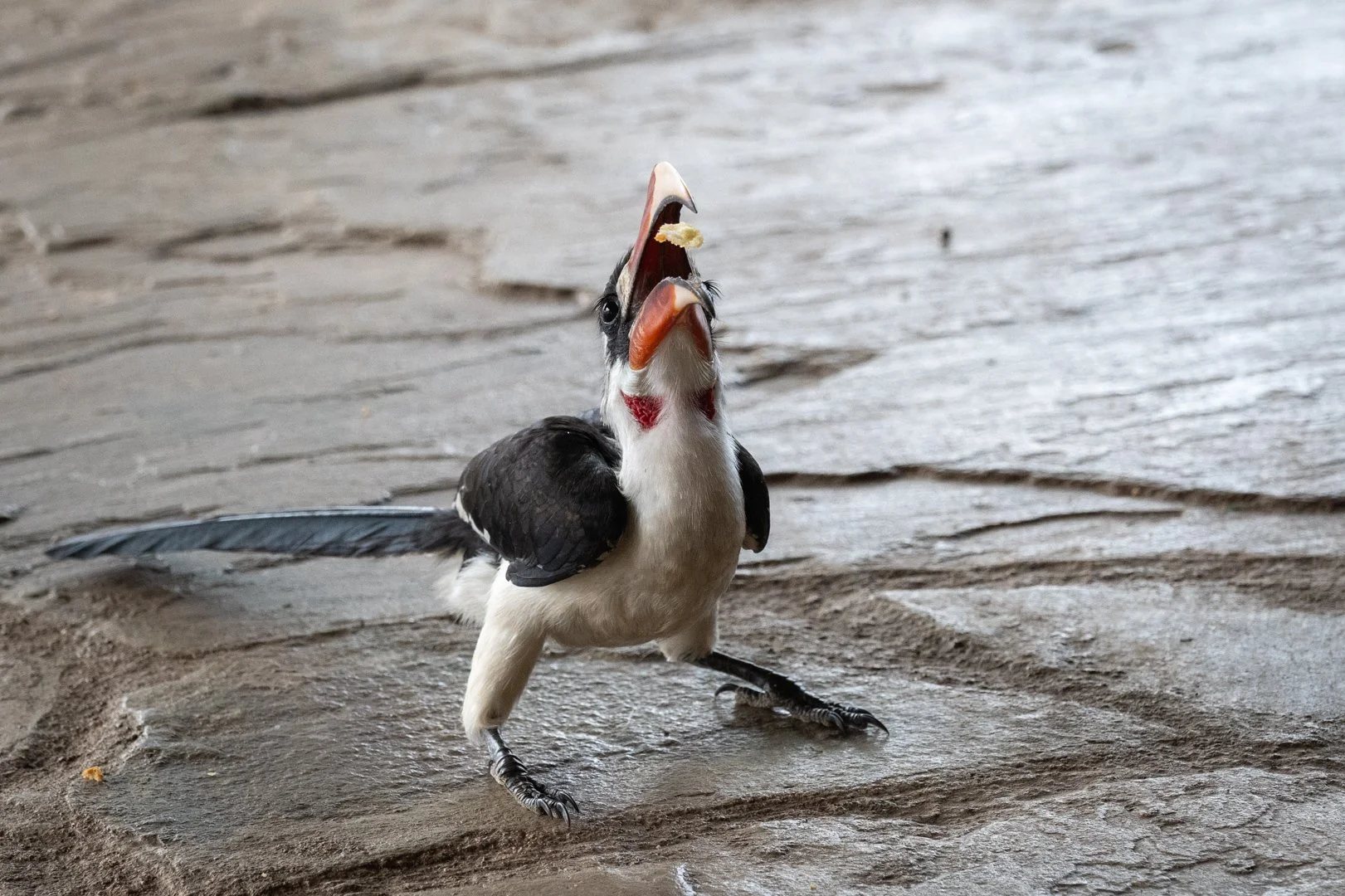
©kathykarn
Step 3: Open wide

©kathykarn
Step 4: Down the hatch
©kathykarn
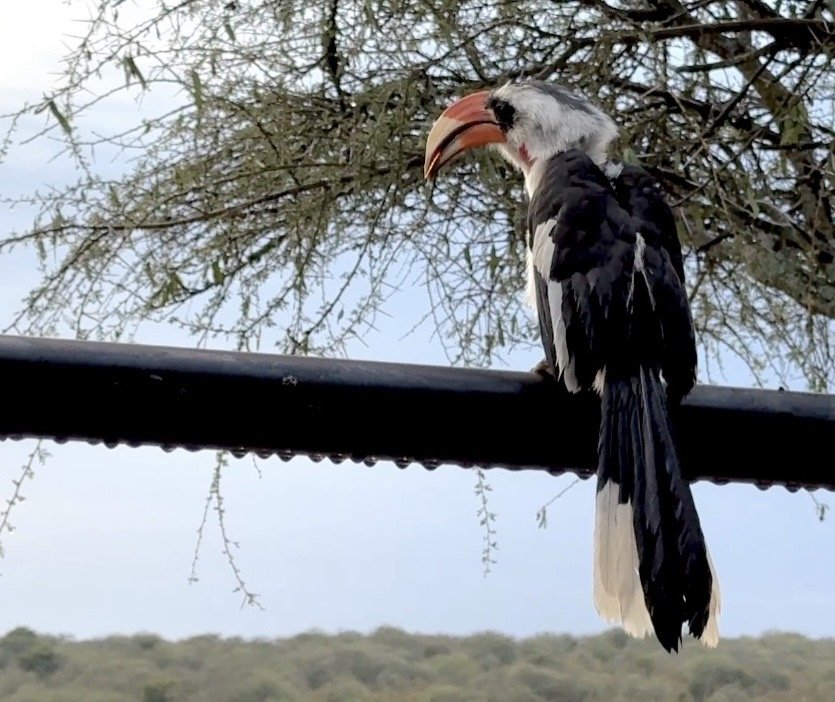
In The Lion King, Zazu reports on the state of the kingdom, likewise, in the wild hornbills constantly scan for danger and are quick to sound alarm calls when predators appear. In some African traditions hornbills symbolize communication, guidance, and guardianship, ideas that are reflected in Zazu’s role as royal advisor and messenger. Turn up your volume to hear my conversation and Zazu’s morning report (25 sec) from a porch in Laikipia, Kenya.
Zazu’s Morning Report ©kathykarn
To my dismay I learned this week that African hornbills’ numbers in the wild are plummeting as they’re being hunted for trade, dead or alive. For years, online platforms like eBay, Etsy and Facebook, despite promoting policies that ban the sale of wildlife, have profited off a completely unregulated trade: hundreds of listings of ornaments made of hornbill skulls, casques and feathers.
None of the 32 African hornbill species used to be protected internationally — until now.
Just days ago, governments finally granted African hornbills their first-ever international protection — a landmark breakthrough that changes everything. Click here to tell eBay, Etsy and Meta to immediately update their policies and ban *all* hornbill products from their platforms NOW.
Enjoy this week's story? Share Heartfelt Stories!
Please hit ❤️ button below, share your comments here and share this story with friends who would love it. Your presence and engagement makes a difference. Thank you for being a subscriber. A percentage of all sales and Substack subscriptions supports wildlife and conservation in Kenya.